Trending...
- Detroit Hip-hop Takes Center Stage: Historic Official Sxsw Showcase Spotlights The City's Rising Music Economy - 127
- Training Lofts Launches $1,099 Unlimited Training Membership Featuring Semi-Private Coaching, Nutrition Support, and Recovery Services - 119
- Pastor Saeed Abedini Releases THE TRUTH – Volume 1, A Deeply Personal Story of Faith, Struggle, and Redemption - 112
Contact: Rob Miller, 517-614-0454 or Joanne Foreman, 517-284-5814
Aug. 3, 2020
This year, many Michiganders have found time to reacquaint themselves with the outdoors. Whether you spend time walking, hiking or exploring neighborhood parks, you can help protect Michigan's trees by spending a little of your outdoors time checking for signs of the Asian longhorned beetle.
Asian longhorned beetle in the U.S.
You can help
Look for signs
Whenever you are outdoors this month, take time to look at the trees around you for signs of the Asian longhorned beetle, including:
Look for the beetle
Be aware of look-alikes
More on Michimich.com
Several beetles and bugs native to Michigan often are mistaken for the Asian longhorned beetle.
Anyone observing an Asian longhorned beetle, or a tree that appears to have been damaged by it, is asked to report it. If possible, capture the beetle in a jar, take photos, record the location and report it as soon as possible at AsianLonghornedBeetle.com or contact MDARD at 800-292-3939 or MDA-info@Michigan.gov.
More information can be found at Michigan.gov/ALB.
Michigan's Invasive Species Program is cooperatively implemented by the Department of Environment, Great Lakes, and Energy, the Department of Natural Resources, and the Department of Agriculture & Rural Development.
Aug. 3, 2020
This year, many Michiganders have found time to reacquaint themselves with the outdoors. Whether you spend time walking, hiking or exploring neighborhood parks, you can help protect Michigan's trees by spending a little of your outdoors time checking for signs of the Asian longhorned beetle.
August is Tree Check Month, and the U.S. Department of Agriculture is asking the public to look for and report any signs of this invasive pest that's not native to Michigan and could cause harm to our environment and economy. In late summer and early fall, adult Asian longhorned beetles drill perfectly round, 3/8-inch holes to emerge from within tree trunks and limbs, where they spend their larval stage chewing through the heartwood. After a brief mating period, female beetles chew oval depressions in trunks or branches to deposit eggs. Sometimes a material resembling wood shavings can be seen at or below exit holes or coming from cracks in an infested tree's bark. |
Asian longhorned beetle in the U.S.
The Asian longhorned beetle was first detected in the U.S. in 1996, when a Brooklyn, New York resident noticed a large, black beetle with irregular white spots and black-and-white banded antennae and reported it. Since that time, the Asian longhorned beetle has been found in 20 locations in six states, including New York, New Jersey, Massachusetts, Illinois, Ohio and, most recently, South Carolina. "ALB likely arrived hidden in untreated wood packaging material like pallets and crates from China or Korea, before we had international standards for treating this material to prevent the spread of insects," said USDA's Asian longhorned beetle national policy manager Paul Chaloux. "The beetle feeds on numerous hardwood species, especially maple, but also ash, birch, elm, poplar and willow, among others." More on Michimich.com
To date, USDA's Animal and Plant Health Inspection Service has been successful in eradicating the beetle from all but four locations in the U.S. However, eradication has both financial and environmental costs. According to the USDA, over $750 million has been spent on the Asian longhorned beetle eradication program in the last 22 years, and at least 180,000 trees have been removed from infested neighborhoods and counties. |
You can help
The beetle has not been detected in Michigan, but discovering early signs of infestation can prevent widespread damage to the state's forest resources, urban landscapes and maple syrup production. "Public participation is the key to early detection," said Rob Miller, invasive species prevention and response specialist with the Michigan Department of Agriculture and Rural Development. "Every known infestation of Asian longhorned beetle in the U.S. was discovered and reported by a member of the public who knew what to look for and how to report it." |
Look for signs
Whenever you are outdoors this month, take time to look at the trees around you for signs of the Asian longhorned beetle, including:
- Round exit holes about the diameter of a pencil found in tree trunks and branches.
- Shallow oval or round scars in the bark where the adult beetle chewed an egg site.
- Material that looks like wood shavings lying on the ground around the tree or in the branches.
- Dead branches or limbs falling from an otherwise healthy-looking tree.
Look for the beetle
Adult Asian longhorned beetles are distinctively large, ranging from 3/4 to 1 1/2 inches in length, not including their long antennae. The beetles are shiny black, with random white blotches or spots, and their antennae have alternating black and white segments. They have six legs that can be black or partly blue, with blue coloration sometimes extending to their feet. |
Be aware of look-alikes
More on Michimich.com
- Detroit Hip-hop Takes Center Stage: Historic Official Sxsw Showcase Spotlights The City's Rising Music Economy
- Training Lofts Launches $1,099 Unlimited Training Membership Featuring Semi-Private Coaching, Nutrition Support, and Recovery Services
- Are Kids Becoming Overscheduled? New Tool Helps Parents Evaluate Activity Balance
- Announcing the Keynote Lineup for PLM Road Map & PDT North America 2026
- American Properties Realty, Inc. Leadership Attends NAHB International Builders' Show in Florida
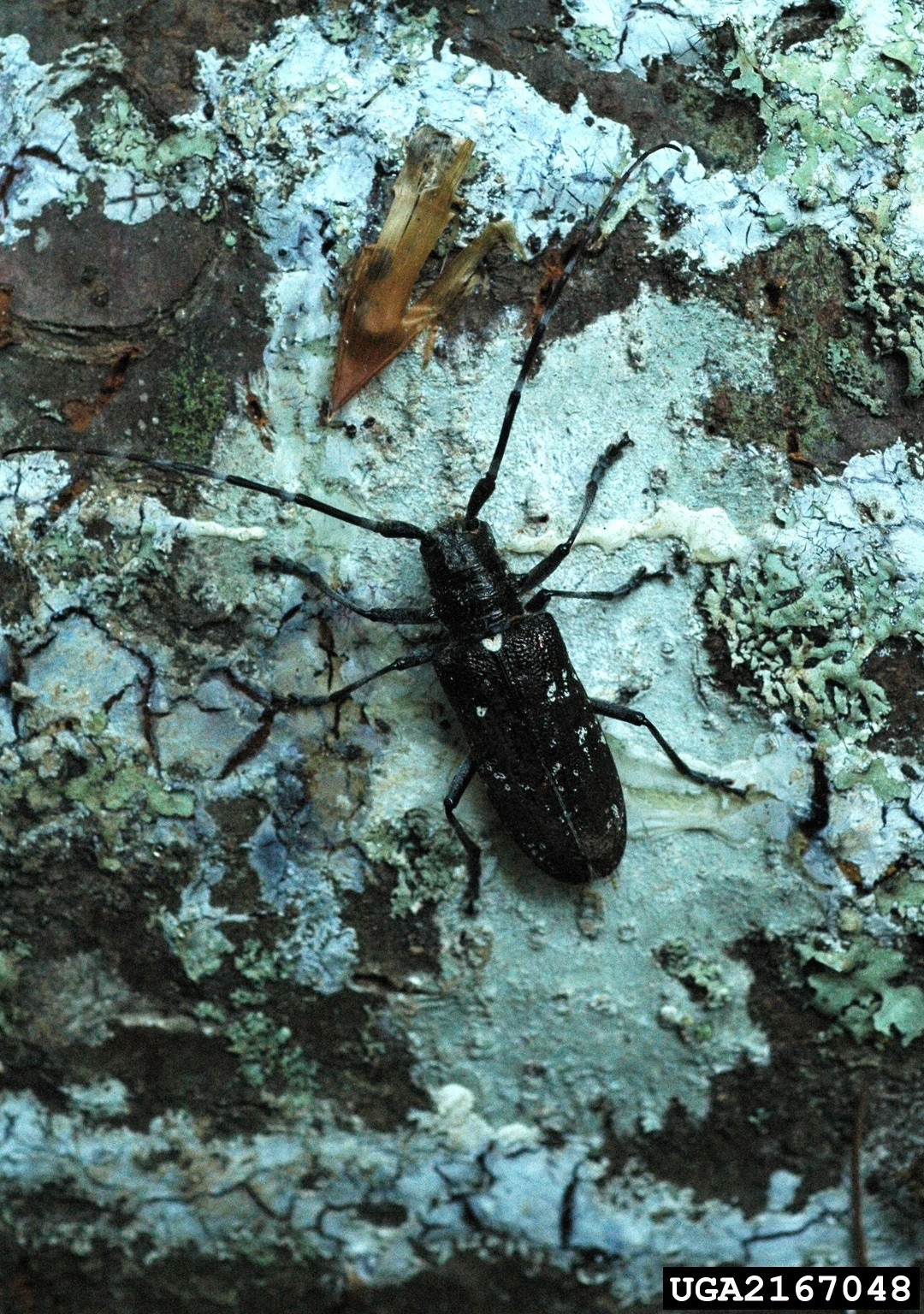
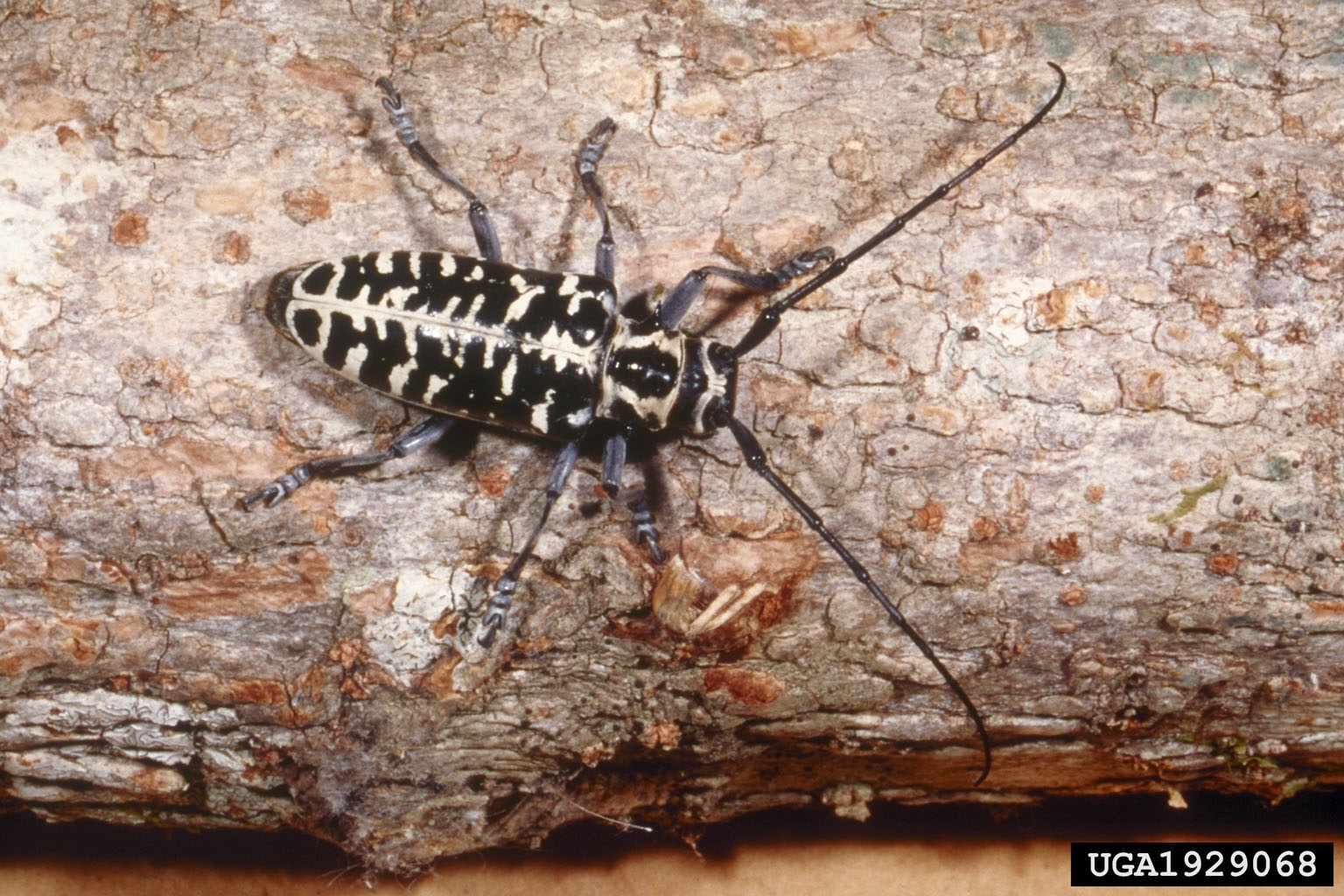
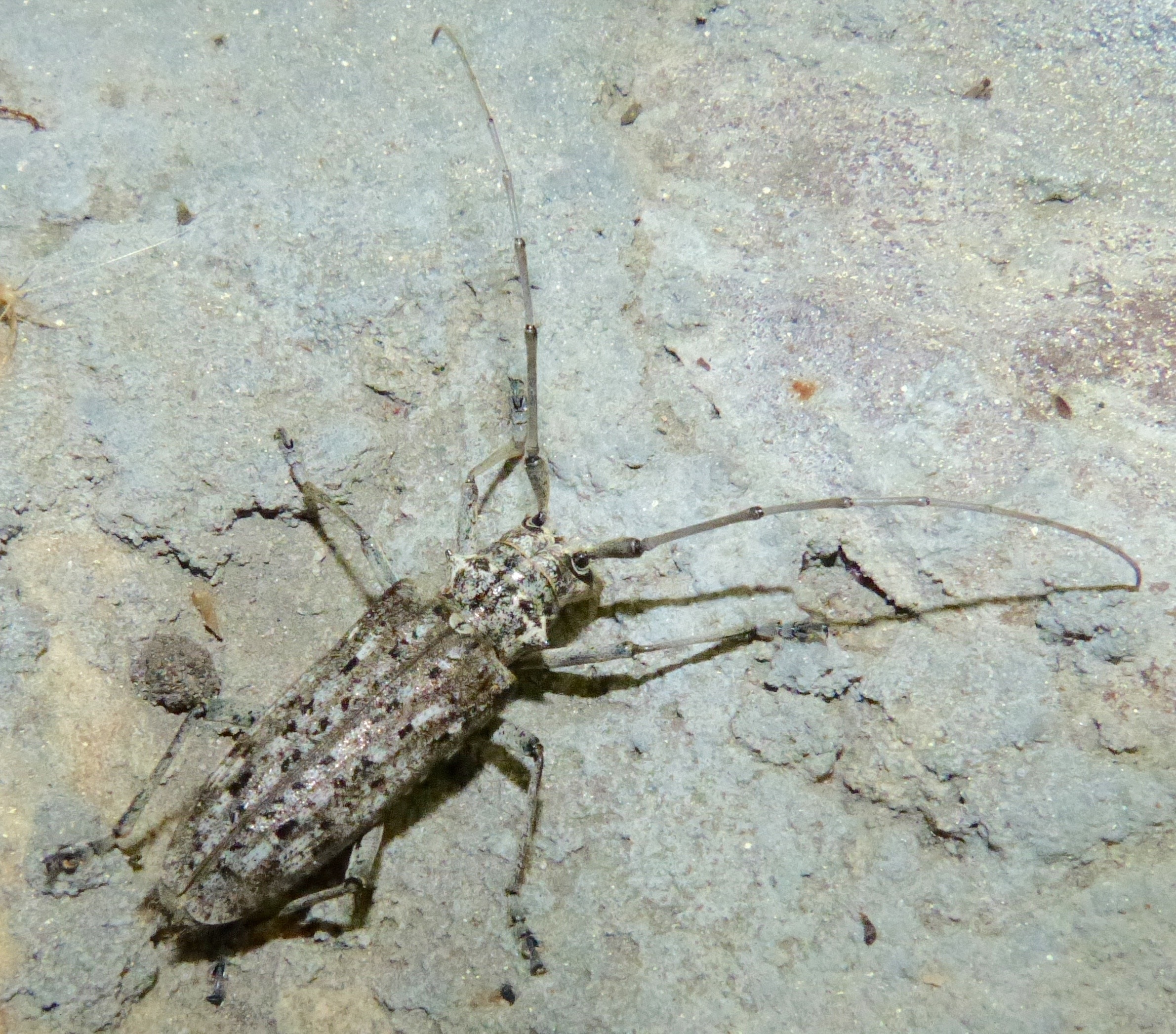
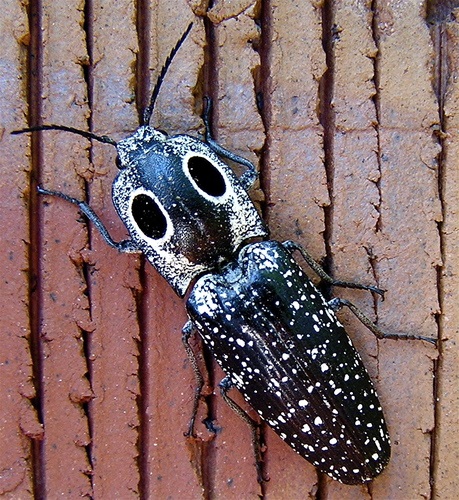
Several beetles and bugs native to Michigan often are mistaken for the Asian longhorned beetle.
- The white-spotted pine sawyer has a distinctive white spot below the base of its head – between its wings – and is brownish in color.
- The cottonwood borer is about the same size as the Asian longhorned beetle and is also black and white, but has a pattern of single, broad black stripes down each wing, and its antennae are all dark.
- The northeastern pine sawyer reaches up to 2 inches in length, has very long antennae and is gray in color.
- The eastern eyed click beetle has distinctive eye circles on the back of its head. It rolls over when threatened, then clicks and makes a flipping movement to get back on its feet.
Anyone observing an Asian longhorned beetle, or a tree that appears to have been damaged by it, is asked to report it. If possible, capture the beetle in a jar, take photos, record the location and report it as soon as possible at AsianLonghornedBeetle.com or contact MDARD at 800-292-3939 or MDA-info@Michigan.gov.
More information can be found at Michigan.gov/ALB.
Michigan's Invasive Species Program is cooperatively implemented by the Department of Environment, Great Lakes, and Energy, the Department of Natural Resources, and the Department of Agriculture & Rural Development.
0 Comments
Latest on Michimich.com
- Veteran Launches GTG Energy: Nicotine-Free Pouch as Americans Rethink Addiction, Focus, and What Fuels Performance
- RecallSentry™ App Launch — Your Home Safety Hub — Free on iOS & Android
- Award-Winning Director Crystal J. Huang's Under-$50K Film "The Ritual House" Wins Best Horror Feature at Golden State Film Festival
- Grads aren't getting hired — here's what we're doing about it
- K2 Integrity Enhances Technology Capabilities Through Acquisition of Leviathan Security Group
- #WeAreGreekWarriors Comes to Detroit in Celebration of Women's History Month
- Buildout Launches CRM, Completing the Industry's First AI-Powered End-to-End Deal Engine for CRE
- Energywise Solutions and Pickleball Pros Partner to Bring More Energy and Visibility to Pickleball Clubs
- The Franchise King® Releases Free Guide for Nervous Buyers
- Kanguro Insurance Taps Paylode to Launch Best-in-Class Pet and Renters Insurance Rewards Experience
- CCHR: CIA Mind-Control Files Raise Urgent Questions as Millions Take Psychotropic Drugs
- NRx Pharmaceuticals Launches Breakthrough One-Day Treatment Clinic in Florida as FDA Pathway and Clinical Data Strengthen Growth Outlook; $NRXP
- Revenue Optics Launches Talent Infrastructure Platform for SaaS Revenue Hiring and Appoints Sabz Kaur to Lead Growth
- Building a Multi-Domain Autonomous Systems Platform at the Intersection of AI, Defense and Infrastructure: VisionWave Holdings (N A S D A Q: VWAV)
- Bent Danholm Named "Top Luxury Real Estate Leader" in Modern Luxury Miami
- Author Ken Mora to Celebrate New Caravaggio Book Debut with Special Event at Palazzo Venezia Naples
- Matthew Sisneros Releases Raw and Unfiltered Memoir: The Devil Lost Another One — A Powerful Story of Crime, Consequence, and Redemption
- From Life to Light: Jess L. Martinez Shares a Soulful Poetry Collection That Explores What It Means to Be Human
- Lawsuit Filed Against Boeing Over Defective Seat Switch on Boeing 787
- Quadcode Acquires Significant Stake in Game 7, LLC - The Parent Company for FPFX Tech and PropAccount.com